


fridge-freezers4781
fridge-freezers4781
The 3 Most Significant Disasters In Fridges The Fridges’s 3 Biggest Disasters In History
The Evolution of Refrigerators: From Iceboxes to Smart Fridges
Refrigeration innovation has actually transformed the way we keep food, significantly affecting our lives. The refrigerator, an important appliance in modern kitchens, has a fascinating history, from the primitive icebox to today’s sophisticated clever fridges. This article explores the evolution of refrigerators, their elements, types, and maintenance pointers, and addresses some regularly asked questions.
A Brief History of Refrigerators
The concept of refrigeration dates back to ancient times when individuals used ice and snow to cool their food and drinks. However, the first mechanical fridge was invented in the 19th century, marking the birth of modern refrigeration technology. Below is a timeline highlighting the essential advancements in fridge and freezer history.
| Year | Milestone |
|---|---|
| 1755 | Scottish researcher William Cullen demonstrates artificial refrigeration. |
| 1805 | Oliver Evans designs the first vapor-compression refrigeration system. |
| 1834 | Jacob Perkins builds the first practical refrigerating device. |
| 1913 | The first electric fridge, the “Domelre,” is presented. |
| 1927 | The very first refrigerator with a self-contained system is produced by General Electric. |
| 1960s | The introduction of frost-free refrigerators revolutionizes home cooling. |
| 2000s | Smart fridges come geared up with internet connection and advanced features. |
How Refrigerators Work
At the heart of any fridge is its cooling system, which generally runs based on the principles of thermodynamics. Comprehending how a buy fridge freezer freezer deals (frydge-uk58886.wiki-racconti.com) works can help consumers appreciate its performance and the importance of regular maintenance.
Parts of a Refrigerator
Here’s a short introduction of the main elements of a refrigerator:
| Component | Function |
|---|---|
| Compressor | Pressurizes refrigerant gas, raising its temperature. |
| Condenser | Releases heat from the refrigerant, enabling it to cool and condense into liquid. |
| Growth Valve | Reduces the pressure of the refrigerant, causing it to evaporate and cool down. |
| Evaporator | Takes in heat from the interior of the fridge freezers for sale, lowering the temperature inside. |
| Thermostat | Screens and manages the internal temperature level. |
Cooling Cycle
The refrigeration cycle follows these steps:
- Compression: The compressor compresses the refrigerant gas, raising its pressure and temperature level.
- Condensation: The hot gas transfer to the condenser coils outside the fridge, where it dissipates heat and changes into a liquid.
- Growth: The high-pressure liquid refrigerant travels through the expansion valve, lowering its pressure and temperature.
- Evaporation: In the evaporator coils inside the fridge, the low-pressure refrigerant soaks up heat, cooling the interior and evaporating back into a gas.
- Cycle Repeats: The cycle continues as the gas go back to the compressor.
Kinds of Refrigerators
With advancements in technology and altering customer needs, numerous types of fridges are now readily available. Here’s a list of the most typical types:
- Top Freezer Refrigerators: Classic design including a freezer compartment on top and the fridge below.
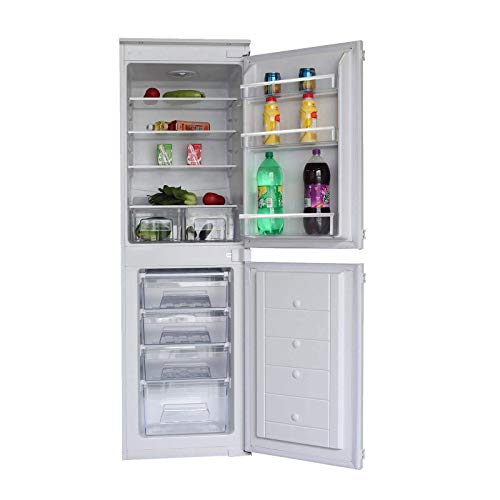
- Bottom Freezer Refrigerators: Offers simple access to fresh products with a freezer drawer at the bottom.
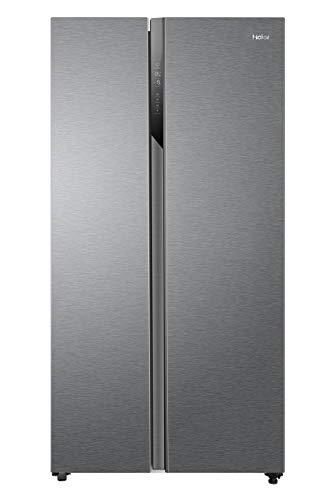
- Side-by-Side Refrigerators: Features two vertical compartments, one for refrigeration and one for freezing, enabling easy access to both.
- French Door Refrigerators: Combines a bottom freezer with double doors for the fridge section, using adequate storage and versatility.
- Compact Refrigerators: Smaller units suitable for dormitory spaces or small areas.
- Smart Refrigerators: Equipped with web connection, touch screens, and includes that enable remote management and food tracking.
| Type | Pros | Cons |
|---|---|---|
| Top Freezer | Low expense, timeless design | Minimal organizational area |
| Bottom Freezer | Easy access, bigger fresh food area | Typically more costly |
| Side-by-Side | Practical layout, simple access to all areas | Limited fridge area |
| French Door | Large, stylish design, energy-efficient | Higher rate point |
| Compact | Space-saving, portable | Limited storage capability |
| Smart | Advanced functions, boosts convenience | Higher cost, potential tech concerns |
Maintenance Tips for Refrigerators
To ensure a long lifespan and optimal performance, routine upkeep of refrigerators is crucial. Here are some maintenance ideas:
- Clean the Coils: Dusty condenser coils can impede effectiveness. Tidy them every six months.
- Examine the Door Seals: Ensure that door seals are airtight to avoid cold air from getting away. Wipe them down frequently.
- Arrange Contents: Keep the fridge freezer next day delivery organized to allow proper airflow and keep temperature level.
- Defrost Regularly: If you have a manual defrost model, defrost it regularly to prevent ice accumulation.
- Display Temperature: Keep the fridge temperature at 37 ° F( 3 ° C)and the freezer at 0 ° F (-18 ° C) for ideal food conservation.
- Change Water Filters: If your fridge freezers for sale has a water filter, change it according to the producer’s suggestions.
FAQ
Q1: How long do refrigerators generally last?A1: Typically, fridges last about 12 to 20 years, depending upon the design and maintenance. Q2: How often must I clean up
my refrigerator?A2: It’s recommended to clean your fridge every 3 months to remove spills and check expiration dates on products. Q3: What ought to I do if my refrigerator is not cooling?A3: First, check if the thermostat is set properly. If it is, check the condenser coils for dust or particles. If problems continue, consider calling a service technician. Q4: Are smarter fridges worth it?A4: If you value benefit and technology, wise fridges can be advantageous
. They typically include functions like grocery inventory tracking and dish ideas. Q5: What is the most energy-efficient type of refrigerator?A5: Generally, bottom freezer and French door fridges are amongst the most energy-efficient models available today.
Fridges have actually come a long method because their inception, progressing into sophisticated home appliances that accommodate modern-day requirements. Comprehending the types, functions, and upkeep of refrigerators can empower customers to make informed choices, guaranteeing their food stays fresh and their appliance stays efficient for several years to come. As innovation continues to advance, it will be intriguing to see how refrigerators progress in the future.
